
Does Your Distributor Collect All Your Royalties? What It Misses
By Yalle Media
No. A distributor such as DistroKid, TuneCore or CD Baby collects only the recording royalties from stores and streaming services. The songwriting side (performance and mechanical royalties) and radio-style "neighboring rights" are paid to other organizations, and most of them pay only people who register with them. If all your money comes from your distributor, you are probably missing some.
Last checked: November 19, 2026.
Why doesn't my distributor collect everything?
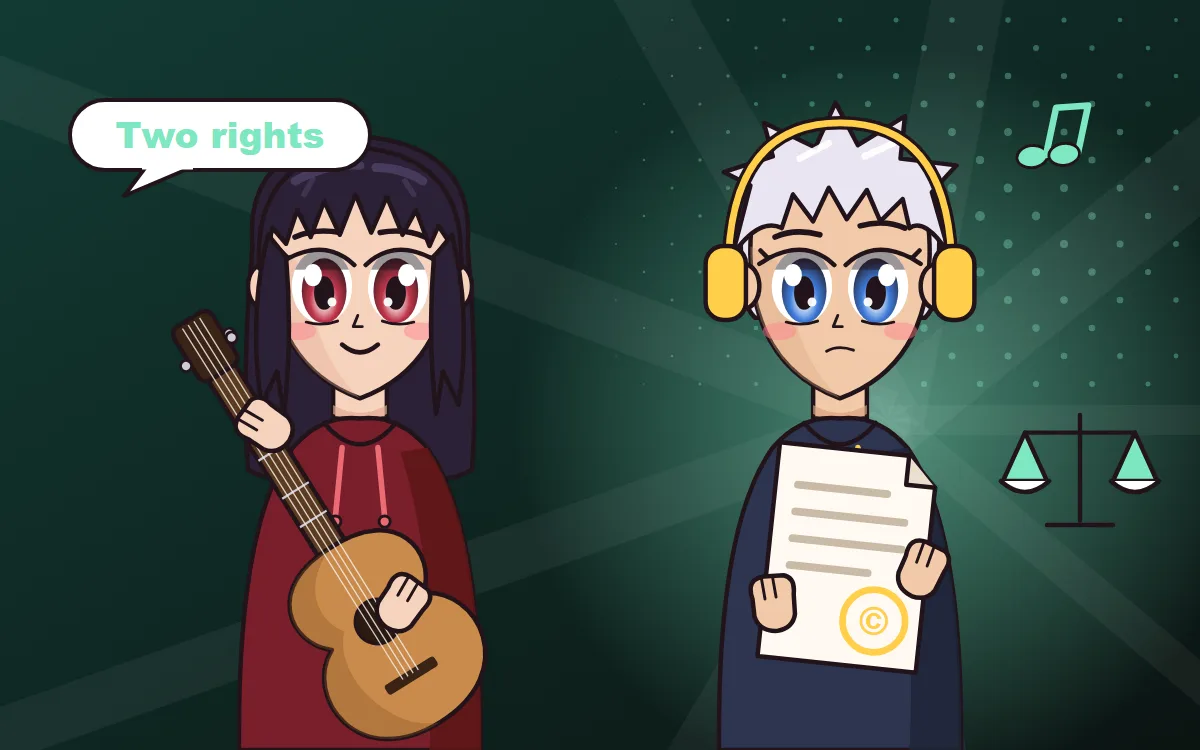
Because one released song is really two copyrights, and services pay for each one through different channels. The recording (the master, the audio file you uploaded) belongs to whoever made or paid for it. The song (the melody and words, the composition) belongs to the songwriters and their publishers. Your distributor licenses the recording to stores. It is not set up to license or track the composition, unless you buy a separate publishing service.
Spotify says it plainly: it does not pay artists or songwriters directly. It pays the "rights holders" the creator has chosen, which it lists as a record label, publisher, independent distributor, performance rights organization or collecting society. On a typical stream, the recording share goes to the label or distributor and the publishing share goes through publishers and collecting societies. If nobody has registered your song with those societies, they have no way to send that share to you.
The money involved is not small. CISAC, the international network of authors' societies, reported in November 2026 that its 228 member societies in 111 countries collected a record €15.5 billion in 2025, and that digital uses made up 42.4% of it. That is songwriter and publisher money, and none of it passes through a distributor.
What are the royalty streams from one song?
Most independent artists who write and record their own music can earn from five streams. Here is who pays each one in the United States, the United Kingdom and Canada, three systems that show the main patterns you will meet elsewhere.
| Royalty | What earns it | United States | United Kingdom | Canada | Does a distributor collect it? |
|---|---|---|---|---|---|
| Recording (master) royalties | Streams and downloads of your recording on Spotify, Apple Music, YouTube Music and others | Your distributor or label | Your distributor or label | Your distributor or label | Yes. This is the one it collects. |
| Performance royalties (song) | Your song played on radio and TV, in venues and shops, performed live, and streamed | A PRO such as ASCAP or BMI | The local authors' society | SOCAN | No |
| Mechanical royalties (song) | Copies of your song: streams, downloads, CDs and vinyl | The MLC for streams and downloads | The local authors' society's mechanical arm | SOCAN (reproduction rights, a separate sign-up) | No, unless you add a publishing admin service |
| Neighboring rights (recording) | Your recording on radio, TV and in public places; in the US, non-interactive digital radio only | SoundExchange (satellite and internet radio) | PPL | Re:Sound and others | No. You register yourself. |
| YouTube Content ID | Other people's uploads that use your recording | Content ID, through YouTube or a partner that qualifies for it | Sometimes, as an optional add-on | ||
The pattern to remember: songwriters get paid by societies, recordings get paid by distributors and neighboring-rights bodies. If you are both the writer and the artist who owns the master, you are owed money on both sides.
What does a performing rights organization pay that my distributor doesn't?
A performing rights organization (PRO) or authors' society licenses the public performance of songs and pays the writers and publishers. Every country with a functioning music market has at least one, and most are part of CISAC's network, which lets them collect for each other's members abroad. You join the society in your own country (or the one you live in), register each song you write with the correct splits, and it collects from radio, TV, venues and streaming services in its territory, plus from sister societies overseas.
How strict the joining rules are depends on the society. SOCAN in Canada, for example, charges no fee and accepts composers, songwriters, producers and lyricists whose work has been published, recorded, or performed or will be performed in public. Check your own society's join page before paying anyone to sign you up.
Who pays mechanical royalties on streams?
Mechanical royalties are paid for copies of a song, and a stream counts as one. Who collects them depends on the country:
- United States: The Mechanical Licensing Collective (The MLC) administers the blanket mechanical license for eligible streaming and download services in the US. Each month those services send it usage data and royalties. Membership is free, and The MLC lists self-administered independent songwriters, people who register their own songs and collect their own royalties, among those who should join.
- Canada: SOCAN handles reproduction (mechanical) rights as well as performing rights. It describes the reproduction right as covering streaming, downloads, CDs, vinyl and social media. Reproduction rights are a separate sign-up from performing rights, so joining for one does not cover the other.
- Elsewhere: in many countries the same authors' society handles both rights, as SOCAN does. The US splits them: performance to a PRO, streaming mechanicals to The MLC. Ask your society which rights it covers.
A fact most guides leave out: The MLC holds royalties it hasn't been able to match to a registered song. It says it plans to start paying those unclaimed royalties out by market share in April 2027, beginning with blanket royalties from January 2021 usage. Market share means the money goes to members in proportion to their size, not to the writer whose song earned it. If you have songs streaming in the US since 2021 and have never registered them, registering before those distributions start is the only way to be in line for money that is actually yours.
What is SoundExchange, and do I need it if I already have a distributor?
SoundExchange collects US digital performance royalties for sound recordings played on non-interactive services, which it lists as services like SiriusXM, Pandora and iHeartRadio. It does not collect for on-demand plays on Spotify or Apple Music; your distributor collects those. Registration is free.
The split is set by US law, not by contract. Under 17 U.S.C. § 114(g)(2), the receipts are divided like this:
- 50% to the copyright owner of the sound recording (usually the label; for a self-released song, you)
- 45% to the featured recording artist or artists
- 2.5% to an independently administered fund for non-featured musicians
- 2.5% to a fund for non-featured vocalists
That is why self-releasing artists should check both sides. If you own your masters and only register as the featured artist, the owner's half has nobody to go to. Some distributors register as the sound recording owner for their artists and some don't, so ask yours before you assume it's covered. SoundExchange publishes searchable lists of unregistered artists and unregistered sound recording owners it holds money for, and you can search them without an account.
SoundExchange also collects abroad. It says it has more than 100 agreements with over 75 collecting societies, covering 93% of the global neighboring rights market. To use that service you must become a member and complete an International Mandate.
Do I get neighboring rights outside the US?
Yes, and in most countries they cover more than digital radio. PPL in the United Kingdom, for example, licenses recorded music played in public and on radio and TV, and pays both performers and recording rights holders. It is free to join for anyone who has performed on, or owns the rights to, recorded music that has been broadcast or played in public. PPL is clear about its limits too: it does not manage on-demand streaming of specific tracks on services like Spotify. So, as in the US, neighboring rights are paid on top of what your distributor sends, not instead of it.
If you are outside the UK and US, find your country's neighboring-rights society (for performers and producers of recordings) and check whether it has agreements with PPL and SoundExchange. That way you can be paid when your recordings are played abroad.
What about YouTube Content ID?
Content ID finds your recording in other people's YouTube uploads and lets the owner block, track or monetize those videos. YouTube offers it only to copyright owners who hold exclusive rights to a substantial body of original material that is frequently uploaded to YouTube. Non-exclusive material such as licensed beats does not qualify. Artists who don't qualify on their own can ask whether their distributor or administrator offers it. If you use it, never opt in a song that uses a non-exclusive beat or samples you didn't clear: Content ID will claim other people's videos that use the same audio.
What changed recently?
- October 5, 2026: DistroKid launched DistroKid Publishing, a publishing administration service that registers songs, tracks usage and collects publishing earnings. It says you don't need a PRO to sign up but that joining one can unlock more royalties. It covers original songs you wrote or co-wrote, and excludes covers, mash-ups, remixes and fully AI-generated tracks. It is being rolled out gradually.
- November 4, 2026: CISAC reported record 2025 collections of €15.5 billion, up 11.3%, with digital at 42.4% of the total.
- April 2027 (planned): The MLC starts market-share distributions of unclaimed royalties, beginning with January 2021 usage.
- Since April 1, 2024: on Spotify, a track must reach at least 1,000 streams in the previous 12 months to earn recording royalties. Spotify says the money from tracks below the line is redistributed to eligible tracks, not kept. This affects your distributor payout, not your songwriter royalties.
What should I register, in what order?
- List what you own. For each release, write down who wrote the song (with percentage splits) and who owns the recording. If you wrote and self-released it, you are on every line.
- Join your local performing rights society as a writer and register every song with its splits and its ISRC (the recording code your distributor gave you).
- Cover mechanicals. In the US, join The MLC or use a publishing administrator who registers with it. In Canada, sign up for SOCAN's reproduction rights. Elsewhere, check whether your society already handles them.
- Register for neighboring rights: SoundExchange (as artist and, if you own the masters, as sound recording owner), PPL or your country's equivalent.
- Decide on a publishing administrator if you have many songs or a lot of listening outside your own country. An admin collects worldwide mechanicals and performance royalties without you joining every society. Compare their commission with what you would collect directly.
- Search the unclaimed lists (SoundExchange's unregistered lists, The MLC's portal) for older releases.
- Keep metadata identical everywhere. Same song title, same writer names, same ISRC. Mismatches are how royalties end up unclaimed.
Pick the do-it-yourself route if you have a handful of songs and most of your listeners are in one country. Pick a publishing administrator if your catalog is large, your songs travel across many countries, or you don't want to manage several accounts. Either way, the free registrations (your society, The MLC, SoundExchange, PPL) cost nothing but time.
While you're organizing your songs, the Yalle setlist builder and chord finder help keep the musical side in order. For the rules on AI-assisted songs, see Can You Copyright an AI-Made Song?
Frequently asked questions
Does DistroKid, TuneCore or CD Baby pay my songwriter royalties?
Not by default. Distribution pays recording royalties. Songwriter royalties need a performing rights society plus mechanical collection, or a publishing administration service, which some distributors now sell separately (for example DistroKid Publishing, launched October 2026).
Is it free to join The MLC and SoundExchange?
Yes. Both say membership or registration is free. The MLC collects US mechanical royalties from streaming and download services; SoundExchange collects US digital performance royalties for recordings played on non-interactive services like SiriusXM and Pandora.
Does Spotify pay artists directly?
No. Spotify says it pays rights holders chosen by the artist or songwriter: labels, distributors, publishers, performing rights organizations and collecting societies. They then pay the creator under their own agreements.
Do I need SoundExchange if I'm not in the US?
If your recordings are played on US satellite or internet radio, yes, or through your own country's society if it has an agreement with SoundExchange. SoundExchange says its international agreements cover 93% of the global neighboring rights market.
Why do my songs earn nothing on Spotify?
Since April 1, 2024, a track needs at least 1,000 streams in the previous 12 months to earn recording royalties on Spotify. Below that, the recording side earns nothing; registering the song with societies covers the songwriter side.
Sources
- Loud & Clear FAQ, Spotify (updated March 11, 2026), checked November 19, 2026
- Modernizing Our Royalty System, Spotify for Artists (November 21, 2023; live April 1, 2024), checked November 19, 2026
- Global Collections Report 2026, CISAC (November 4, 2026), checked November 19, 2026
- The MLC home page, The Mechanical Licensing Collective, checked November 19, 2026
- Membership, The MLC, checked November 19, 2026
- Unclaimed Accrued Royalties, The MLC, checked November 19, 2026
- For Artists, Labels and Producers, SoundExchange, checked November 19, 2026
- International Partners, SoundExchange, checked November 19, 2026
- 17 U.S.C. § 114, Scope of exclusive rights in sound recordings, U.S. Copyright Office, checked November 19, 2026
- The rights PPL can collect for, PPL, checked November 19, 2026
- Become a PPL member, PPL, checked November 19, 2026
- What are SOCAN reproduction rights?, SOCAN, checked November 19, 2026
- Sign up for performing rights, SOCAN, checked November 19, 2026
- How Content ID works, YouTube Help, checked November 19, 2026
- Qualify for Content ID, YouTube Help, checked November 19, 2026
- Introducing DistroKid Publishing, DistroKid (October 5, 2026), checked November 19, 2026
Comments